

If you’re searching for smarter ways to improve your fitness without overhauling your entire schedule, you’re in the right place. This article is designed to help you build strong foundations, apply practical core strategies, and implement wellness routines that actually fit into real life. Whether your goal is better energy, improved strength, or overall body optimization, you’ll find clear, actionable guidance here.
Many people struggle with inconsistency, wasted effort, or routines that simply don’t deliver results. That’s why we focus on proven principles, sustainable habits, and time efficient workouts that maximize impact without demanding hours in the gym. Every recommendation is grounded in established fitness science, practical application, and evidence-based wellness strategies.
By the end, you’ll understand how to structure your routine, avoid common mistakes, and apply simple body hacks that support long-term progress—so you can train smarter, recover better, and optimize your everyday performance.
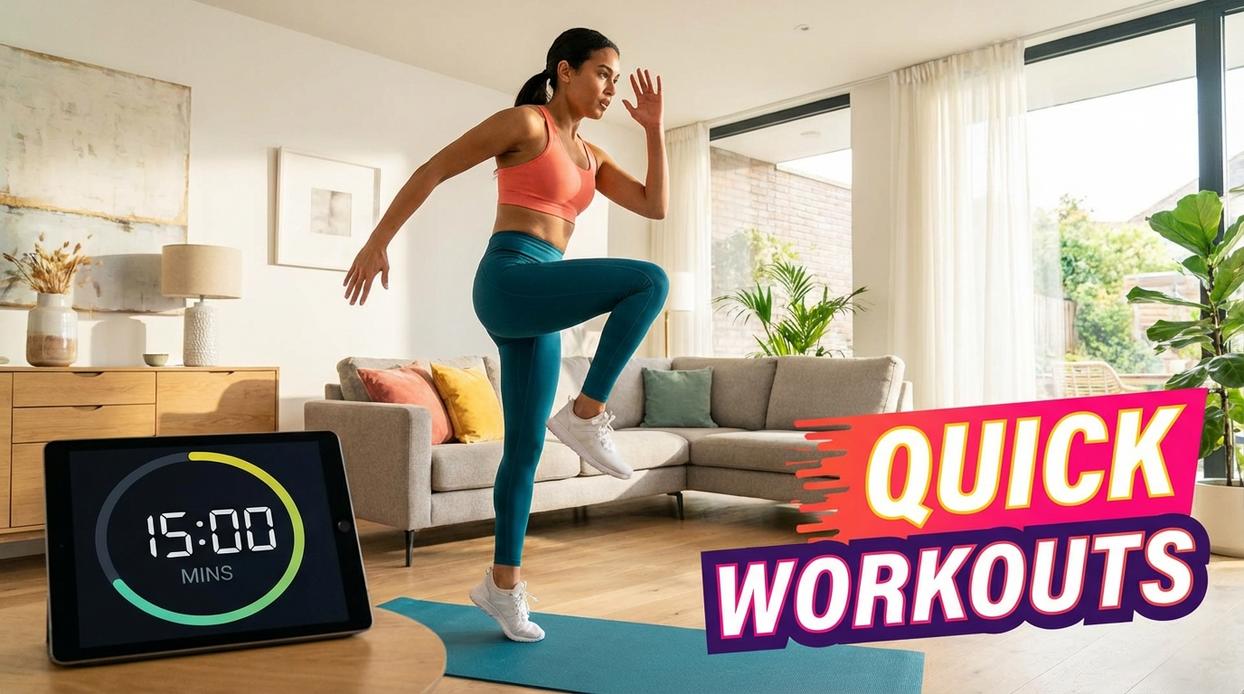
Busy schedules make consistent, effective workouts feel impossible. Between meetings, family, and endless notifications, fitness often slips last. This guide gives you a strategic blueprint to make every minute count, using exercise-science principles like intensity, progressive overload, and metabolic stress. Instead of longer sessions, focus on compound moves such as squats, push-ups, and rows, performed in circuits. For example, set a 20-minute timer, rotate three exercises, and rest only 30 seconds. Additionally, track reps weekly to ensure progression. These time efficient workouts build muscle, burn fat, and boost endurance, even when you only have 20–30 minutes available to spare today.
The foundational shift in fitness is simple: DENSITY beats duration. Workout effectiveness hinges on how much work you perform per minute, not how long you linger at the gym. Researchers at McMaster University found that brief, high-intensity intervals produced similar cardiovascular and metabolic benefits to longer steady-state sessions (Gillen et al., 2016). That surge in effort creates METABOLIC STRESS—the buildup of lactate and cellular byproducts that signal your body to adapt, release growth-supporting hormones, and burn more fuel. Think of time efficient workouts as focused sprints, not marathons. To calibrate intensity, use the Rate of Perceived Exertion scale: aim for a 7–9 during work intervals, where conversation breaks and breathing deepens.
• PUSH hard, recover briefly.
• PRIORITIZE quality over clock-watching.
When you treat each session like a sprint, output rises—and results follow. Short bursts can outperform longer slogs, if intensity stays consistently high for measurable physiological gains.
Strategy 1: Full-Body Activation with Compound Lifts
First, let’s define terms. Compound exercises are movements that train multiple muscle groups and joints at the same time—think squats, where your quads, hamstrings, glutes, and core all fire together. Isolation exercises, on the other hand, target a single muscle group, like bicep curls focusing mainly on the biceps. Both have value, but if you’re short on time (and who isn’t?), compound lifts deliver more return per rep.
Here’s why. Because compound movements recruit more muscle fibers, they burn more calories and stimulate greater overall muscle growth compared to isolation work (American Council on Exercise). In practical terms, one set of squats does more for your body than a set of leg extensions. It’s efficiency at its finest—like choosing a Swiss Army knife over a single screwdriver.
Now, let’s break down the Big Five:
- Squats: The king of lower-body strength. Keep your chest tall and push through your heels.
- Deadlifts (or Kettlebell Swings): Train your posterior chain—glutes, hamstrings, and lower back.
- Push-Ups: A classic upper-body push that hits chest, shoulders, and triceps.
- Pull-Ups (or Rows): Essential for back strength and posture.
- Overhead Press: Builds shoulder stability and core control.
To put this into action, choose one lower body, one upper body push, and one upper body pull exercise. Perform 3 sets of 8–12 reps each. For example: squats, push-ups, and rows. Rest 30–60 seconds between sets. This simple structure creates powerful, time efficient workouts you can finish in 15 minutes.
Pro tip: Focus on controlled form before adding weight—quality reps always win.
Strategy 2: Amplify Calorie Burn with High-Intensity Intervals
If you’re short on time but still want serious results, High-Intensity Interval Training (HIIT) can be a game changer. HIIT simply means alternating short bursts of near all-out effort with brief recovery periods. Instead of jogging steadily for 30 minutes, you push hard, rest, and repeat. Think of it as sprinting between lampposts instead of strolling the whole block.
So why does this work so well? It comes down to the “afterburn effect,” formally known as Excess Post-Exercise Oxygen Consumption (EPOC). In simple terms, your body uses extra oxygen to recover after intense effort, which keeps your metabolism elevated for hours post-workout (American Council on Exercise). In other words, you burn additional calories even while showering or answering emails (yes, recovery counts).
To make this practical, try one of these plug-and-play options:
- Tabata: 20 seconds all-out, 10 seconds rest, 8 rounds (4 minutes).
- 30/30 Protocol: 30 seconds hard effort, 30 seconds rest, 10 rounds (10 minutes).
Great exercises include burpees, kettlebell swings, stationary bike sprints, or jumping jacks. These are perfect for time efficient workouts when your schedule feels packed.
Still, some argue steady-state cardio is safer or easier to sustain. That’s fair—HIIT is demanding. However, when done 2–3 times weekly with proper form, it complements endurance training beautifully.
And if you’re balancing intensity with daily movement, revisit your step count goals how many steps do you really need (https://gerenaldoposis.com/step-count-goals-how-many-steps-do-you-really-need/) to round out your routine.
Optimization Hack: Supersets and Reduced Rest
If your workouts feel long but not productive, supersets can fix that. A superset means performing two different exercises back-to-back with little to no rest between them. This increases workout density (more work in less time) and is ideal for time efficient workouts.
One of the smartest variations is the antagonist superset. This pairs opposing muscle groups so one works while the other recovers. For example:
- Dumbbell bench press (chest, pushing)
- Dumbbell rows (back, pulling)
While your chest rests, your back works. That built-in recovery lets you maintain strength without standing around (scrolling doesn’t count as rest).
Next, adjust rest strategically. Keep breaks between rounds to 30–45 seconds. Shorter rest keeps your heart rate elevated and increases metabolic stress—the muscle-building stimulus linked to growth (Schoenfeld, 2010).
Pro tip: If performance drops sharply, rest slightly longer. Intensity matters—but so does quality movement.
Your Blueprint for a Time-Efficient Fitness Routine
You’ve officially separated gym time from gym results. That’s the breakthrough. More hours no longer equal better outcomes. A packed schedule is still real—but it’s no longer your excuse.
The win? You now know how to make time efficient workouts deliver serious results. By prioritizing intensity, choosing compound movements (exercises that train multiple muscle groups at once), and layering in smart tools like HIIT and supersets, you maximize every minute. Less scrolling between sets. More stimulus. Better return on effort.
What’s in it for you?
- Faster sessions that fit your calendar
- Stronger muscles through focused compound lifts
- Higher calorie burn in less time
- Momentum that builds consistency
Some argue longer workouts are superior. But research shows intensity and progressive overload drive adaptation—not clock-watching (American College of Sports Medicine).
Here’s your move: build one 20-minute workout this week using these principles. Stay consistent. Stack sessions. Watch results compound (just like interest).
Build Strength Without Wasting Another Minute
You came here looking for a smarter way to train — something sustainable, effective, and realistic for your busy life. Now you understand how fitness foundations, smart core strategies, and simple wellness routines work together to create real, lasting progress.
The truth is, the biggest obstacle isn’t motivation. It’s time. When your schedule is packed, long complicated programs fall apart. That’s why focusing on time efficient workouts and practical body optimization strategies isn’t just helpful — it’s essential. You don’t need more hours in the gym. You need better structure and intentional action.
So here’s what to do next: choose one core strategy, implement one optimization habit, and commit to a focused weekly plan built around time efficient workouts. Start small, stay consistent, and track your progress.
If you’re tired of wasting effort on routines that don’t fit your life, now is the time to upgrade your approach. Thousands are already transforming their performance with smarter systems that actually work. Take action today, apply what you’ve learned, and build a routine that finally works as hard as you do.