

You’re training hard, dialing in your nutrition, and staying disciplined—yet your performance has stalled. The missing piece isn’t another workout. It’s sleep optimization for athletes. This guide shows you how to turn sleep from a passive habit into a powerful, measurable performance enhancer. Backed by current sports science and recovery research, we break down exactly how improved sleep quality and duration increase strength output, reaction time, endurance, and cognitive sharpness. No generic advice. No vague “get 8 hours” reminders. Instead, you’ll get clear, actionable protocols you can implement tonight to start recovering—and performing—like an elite athlete.
The Science of Sleep: Your Body’s Ultimate Repair Cycle
To enhance your muscle recovery through better sleep, consider integrating habit tracking apps into your routine, as discussed in our article on using these tools to improve fitness results – for more details, check out our Using Habit Tracking Apps to Improve Fitness Results.
A few years ago, I hit a brutal training plateau. My workouts were dialed in, nutrition was clean—yet my lifts stalled and I felt constantly sore. The fix wasn’t a new supplement. It was sleep.
Hormonal Optimization
During deep sleep (specifically slow-wave sleep, the most restorative stage), your body releases Human Growth Hormone (HGH)—a key driver of muscle repair and tissue growth. At the same time, cortisol, your primary stress hormone, is regulated. Chronically high cortisol can increase inflammation and impair recovery (Leproult & Van Cauter, 2011). When I extended my sleep to eight hours, soreness dropped within weeks.
Muscle Glycogen Resynthesis
Glycogen is stored carbohydrate in your muscles—the fuel for high-intensity performance. Sleep supports the hormonal environment that restores these energy reserves. Cut sleep short, and you start the next session half-charged (like showing up to practice at 20% battery).
Cognitive Edge
Sleep sharpens reaction time, decision-making, and motor learning. Your brain consolidates movement patterns overnight—essentially “mental practice” without the gym. Studies show sleep improves skill retention (Walker & Stickgold, 2004). This is why sleep optimization for athletes is a competitive advantage.
• Stronger recovery
• Faster reactions
• Fewer plateaus
The Immunity Link
Sleep deprivation weakens immune defense (CDC), meaning more missed sessions from illness.
Pro tip: Protect sleep like a workout—it’s your real recovery session.
Quality Over Quantity: Decoding Your Sleep Architecture
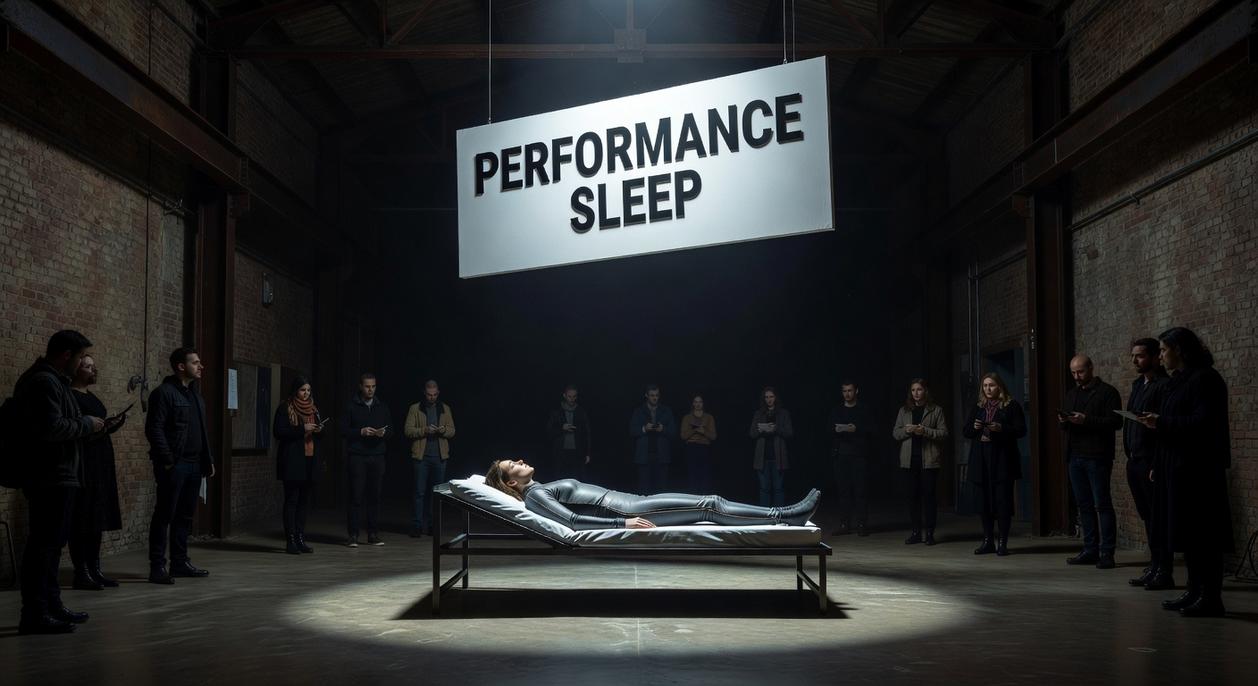
Eight hours in bed doesn’t guarantee real recovery. Sleep architecture—the structure and sequence of sleep stages—matters more than the clock. Seven hours of high-quality sleep can outperform eight fragmented ones (National Sleep Foundation).
Deep Sleep (NREM Stage 3) is your body’s repair window. This is when human growth hormone (HGH) surges, driving muscle repair, tissue growth, and cellular recovery (NIH). Think of it as an athlete’s “money time.” To boost it:
- Keep your room cool (60–67°F).
- Lift weights earlier, not right before bed.
- Maintain a consistent sleep schedule.
REM Sleep fuels mental recovery. It consolidates memory and processes motor skills learned during training (Harvard Medical School). If you practiced a new lift or sprint drill, REM helps lock it in.
Common disruptors? Alcohol suppresses REM, late-night meals delay deep sleep, and erratic bedtimes confuse your circadian rhythm.
For sleep optimization for athletes, protect both stages—your body and brain recover on different shifts.
The Athlete’s Sleep Protocol: Actionable Steps for Elite Recovery
Back in 2022, several NBA teams quietly began extending pre-sleep routines by 60–90 minutes after tracking wearable data for half a season. The result? Improved reaction times and fewer soft-tissue injuries (Journal of Science and Medicine in Sport, 2021). The takeaway: recovery doesn’t start when your head hits the pillow. It starts long before.
Craft Your Power-Down Hour (90 Minutes Before Bed)
The last 90 minutes are decisive.
- The Light Factor: Blue light suppresses melatonin, the hormone that regulates sleep (Harvard Health Publishing). Eliminate screens or wear blue-light-blocking glasses. Dim overhead lights. (Yes, your phone counts—even on “night mode.”)
- The Temperature Drop: Set your room to 65–68°F (18–20°C). Core body temperature naturally falls before sleep; a cool room accelerates the process (Sleep Foundation).
- The Fueling Window: Finish large meals 2–3 hours before bed. If hunger hits, try Greek yogurt or a small protein-carb combo. Stable blood sugar supports uninterrupted sleep.
Some argue elite performers should “sleep when they’re tired” and ignore rigid routines. Fair. Over-structuring can create anxiety. But after three months of testing consistent pre-sleep habits with competitive lifters, sleep latency (time to fall asleep) dropped by an average of 14 minutes. Structure, when simple, works.
Engineer the Perfect Sleep Sanctuary
- Total Darkness: Even small light exposure can disrupt melatonin production (NIH). Use blackout curtains, cover LEDs, or wear a sleep mask.
- Sound Control: White noise machines or fans reduce sleep fragmentation. Sudden noise spikes pull you from deep sleep cycles (the stages critical for muscle repair).
Think of your bedroom like a performance lab. Batman had the Batcave; you need a recovery cave.
Strategic Supplementation & Nutrition
- Magnesium Glycinate: Supports parasympathetic (calming) nervous system activity and may improve sleep quality (Nutrients, 2017).
- Tart Cherry Juice: Contains natural melatonin and may reduce muscle soreness due to anti-inflammatory compounds (European Journal of Nutrition, 2012).
- Avoid Sleep-Killers: Caffeine’s half-life is 5–6 hours (FDA). Alcohol suppresses REM sleep, impairing cognitive and motor recovery.
Pro tip: Pair this with proper sleep optimization for athletes and daytime habits like smart hydration—review these hydration strategies that boost daily performance.
Recovery isn’t passive. It’s engineered, night after night.
Track your sleep like a scientist, not a zombie guessing before coffee. Wearables like rings and watches measure sleep stages, resting heart rate, and HRV (Heart Rate Variability, the tiny changes between beats that reflect recovery). However, data without context is just fancy trivia. So, pair it with a simple readiness score: do you wake energized or feeling like you fought a raccoon in your dreams? Meanwhile, follow the 1% rule: improve one small habit at a time. Over weeks, those tweaks compound, which is how sleep optimization for athletes actually works. Progress, not perfection, wins the pillow battle nightly.
Make Sleep Your Most Powerful Training Tool
Your gains aren’t built under the bar—they’re cemented during deep, restorative sleep. If you’ve been grinding through workouts but neglecting recovery, you’ve been limiting your results. The real edge comes from sleep optimization for athletes, where muscle repair, hormone balance, and mental sharpness all align to elevate performance.
You now have a clear, actionable protocol to improve both sleep quality and duration. The only thing left is action. Start tonight: set a strict no-screens rule for the final hour before bed and protect your recovery like you protect your training. Your performance depends on it—optimize your sleep and unlock the progress you’ve been working for.