
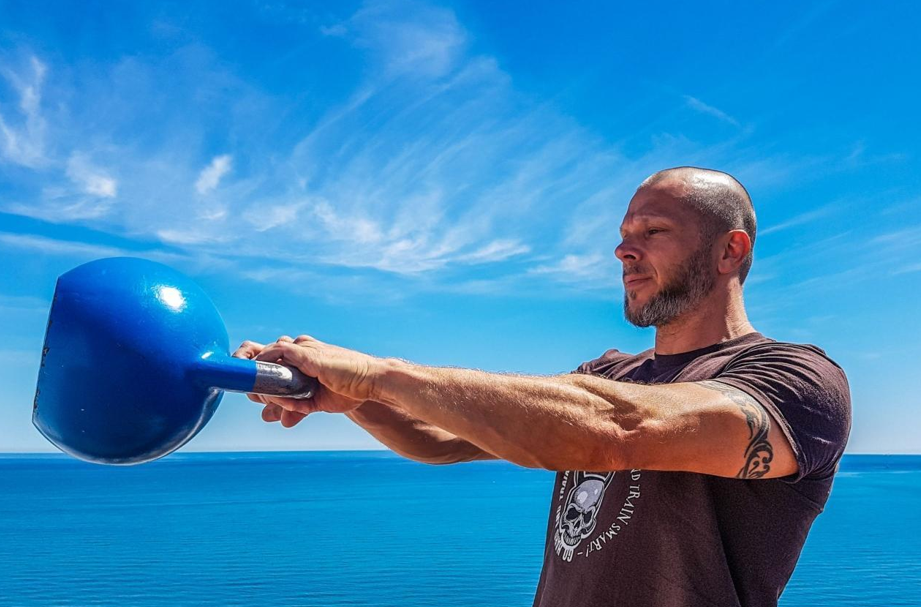
A person can lift more weight or finish a sprint faster while still feeling exhausted during ordinary tasks. That gap explains why the fitness metrics that matter extend beyond strength and speed. Useful measurements also show how well the heart recovers and how long effort can be sustained. They reveal how freely joints move and how consistently the body handles training. Tracking a small group of repeatable indicators creates a fuller picture of progress without turning every workout into a test.
Why Are Strength and Speed Not Enough?
Strength and speed describe important abilities, but neither captures total fitness. A strong athlete may tire quickly during repeated efforts. A fast runner may have limited mobility or recover poorly between sessions. The most practical fitness tips therefore measure several qualities instead of chasing one impressive number.

A balanced scorecard should answer three questions:
- Can the body produce useful effort?
- Can the body sustain and repeat that effort?
- Can the body recover well enough to train again?
How Can You Measure Work Capacity?
Work capacity shows how much useful activity a person can complete before form, pace, or concentration declines. A simple test may involve walking for a fixed time, completing controlled circuits, or maintaining a steady cycling pace. The six-minute walk test has long been used to measure functional exercise capacity. Simple field tests can therefore provide meaningful information about physical performance.
The goal is to compare similar efforts under similar conditions, not to finish completely drained. When examining endurance versus stamina, it helps to separate sustaining a moderate workload from maintaining output as fatigue builds. Both qualities matter, but each may improve at a different rate.
Does Sweat Show Workout Quality?
No. The claim that sweating more means a better workout confuses temperature control with training quality. Sweat rate can change with heat, humidity, clothing, hydration, genetics, and acclimation. A soaked shirt does not prove that the heart, muscles, or movement skills received the right challenge.
A better session review uses observable signals:
- Planned work was completed with stable technique.
- Effort matched the purpose of the session.
- Pain did not alter normal movement.
Recovery was reasonable by the next workout.
What Should a Simple Tracking Plan Include?
A useful fitness guide should track a few measures that are easy to repeat. Complex testing creates noise when sleep, equipment, surfaces, and measurement methods keep changing. Consistency matters more than collecting dozens of numbers.
Start with a short baseline:
- Resting heart rate under similar morning conditions
- Heart rate one minute after a standard effort
- Distance covered during a fixed-time walk or run
- Repetitions completed with controlled technique
- Comfortable range of motion in key joints
- Weekly training completion and perceived effort
Why Does Heart Rate Recovery Matter?
Heart rate recovery shows how quickly heart rate falls after exercise stops. Research commonly defines it as the difference between peak exercise heart rate and the rate recorded after a set recovery period. The one-minute value is often used in exercise testing.
For personal tracking, use the same activity, duration, intensity, posture, and timing. A faster drop over several weeks may suggest improved recovery from that task. One unusual reading should not drive a conclusion. Heat, stress, illness, caffeine, and poor sleep can affect the result.
Which Functional Movements Reveal Progress?
Functional tests reveal whether training supports everyday movement. Useful options include a controlled chair stand, stair climb, floor-to-stand movement, or loaded carry. A 30-second chair-stand test has been studied as a practical indicator of lower-body function in active older adults.
Quality matters as much as quantity. Count only repetitions that use the same depth, control, and setup. Stop when technique changes significantly. The fitness metrics that matter should describe usable capacity, not reward rushed repetitions that hide fatigue.
How Should Mobility Be Measured?
Mobility should be measured through repeatable movements, not through a vague feeling of being tight. Choose positions connected to daily life or training. An ankle knee-to-wall check, overhead reach, or controlled squat can reveal changes without specialized equipment.
Record the setup, range, and comfort level. Progress may appear as smoother control, less compensation, or easier access to the same position. More range is not always better. The goal is enough motion to perform chosen activities comfortably and safely.
Can Balance and Coordination Improve?
Yes. Balance and coordination respond to practice, although progress may be less obvious than a heavier lift. A single-leg stand, heel-to-toe walk, controlled step-down, or change-of-direction drill can create repeatable benchmarks.
Measure time, accuracy, stability, or clean repetitions. Use a safe space near stable support when testing balance. The task should reveal change without creating an unnecessary fall risk.
How Do You Track Recovery Without Expensive Technology?
Recovery can be tracked with a brief daily check. Rate sleep quality, muscle soreness, motivation, and general energy on the same small scale. Compare the pattern with training performance rather than treating one score as a diagnosis.
The fitness metrics that matter become clearer when performance and recovery are viewed together. A slower session after poor sleep may be normal. Repeated declines across several measures may signal that training volume, life stress, or recovery habits need adjustment.
How Often Should You Retest?
Most fitness measures do not need daily testing. Daily maximal efforts can create fatigue and make normal variation look like failure. Resting measures may be logged more often, while demanding tests are better repeated every few weeks.
Use the same conditions whenever possible. Keep the time of day, warm-up, route, equipment, and test order consistent. Compare trends across several attempts. A personal best is encouraging, but stable improvement is more useful.
What Does Well-Rounded Progress Look Like?
Well-rounded progress means daily tasks and training feel more manageable, repeatable, and controlled. A person may notice a lower effort at the same walking pace, quicker recovery after a circuit, steadier balance, or improved movement comfort. Those changes may matter more than a small increase in maximum strength.
Focus on the Fitness Metrics That Matter
The best tracking system remains simple enough to use. Select four to six measures that match current goals, record them consistently, and review trends monthly. The fitness metrics that matter are the ones that show whether the body can perform, adapt, and recover—not merely produce one impressive result.